


The ExamFX Series 7 course was recently rated Most Comprehensive exam prep in the industry by...
Explore the steps to become a financial advisor, including licensing requirements, certifications, and career paths in the financial services industry.

The financial industry offers a world of opportunities for those seeking a rewarding and dynamic career. In this guide, we'll walk through the career path, qualifications, skills, and steps to becoming a financial advisor, along with why now is a particularly strong time to start.
What Is a Financial Advisor?
A financial advisor is a professional who provides guidance on financial planning, investments, retirement, and wealth management, helping clients work toward their financial goals.
Financial Advisor Career Path
The field offers several paths depending on your interests:
- Wealth Management Advisor: manages investments for high-net-worth clients.
- Retirement Planner: helps clients plan for a secure retirement.
- Insurance Advisor: helps clients select insurance policies that fit their needs.
- Estate Planner: works on estate planning and wealth transfer strategies.
- Investment Advisor: manages and advises on investment portfolios.
These career paths offer flexibility and the opportunity to cater to your interests and expertise.
What Does a Financial Advisor Make?
According to the Bureau of Labor Statistics, the median pay for personal financial advisors was $102,140 as of May 2024, with the top 10% earning more than $239,200. Many advisors earn a combination of fees and commissions, which can significantly increase compensation for those who build a strong client base.
Why Now Is a Strong Time to Become a Financial Advisor
The industry is heading into a period of real demand, driven by three separate trends converging at once:
The workforce is aging out. The BLS projects 10% employment growth for personal financial advisors from 2024 to 2034, well above the average for all occupations, with about 24,100 openings projected each year. The primary driver is the wave of advisors themselves reaching retirement age: research firm Cerulli Associates found that 105,887 advisors plan to retire over the next decade, and more than a quarter of them don't yet have a succession plan in place.
McKinsey projects a real capacity gap. A widely cited McKinsey & Company study estimates the industry will be short roughly 100,000 financial advisors by 2034 relative to client demand, calling it "a monumental challenge... with no easy solution."
There's a historic amount of wealth changing hands. Cerulli projects $124 trillion will transfer between generations through 2048, with roughly $105 trillion going directly to heirs. That transfer creates sustained demand for advisors who can guide both the generation receiving the wealth and the families managing the transition.
None of this means the path is easy. Industry research also shows more than 70% of new advisors leave within five years, often because they underestimate the licensing and client-building work up front. Going in with the right preparation and realistic expectations matters as much as the opportunity itself.
Qualifications for a Financial Advisor
Most financial advisor roles look for a bachelor's degree in finance, economics, or a related field, though requirements vary by employer and role. Beyond the degree, securities licenses like the Series 6, Series 7, Series 63, and Series 65 build the credibility and legal authority to actually do the work.
Financial Advisor Skills
To excel in this field, you'll need a set of key skills, including:
- Financial Analysis: analyzing data to make informed recommendations.
- Communication: explaining complex financial concepts clearly.
- Client Relationship Management: building trust and long-term rapport.
- Ethical Conduct: maintaining high standards in every client interaction.
Steps to Become a Financial Advisor
Here's a step-by-step guide to becoming a financial advisor:
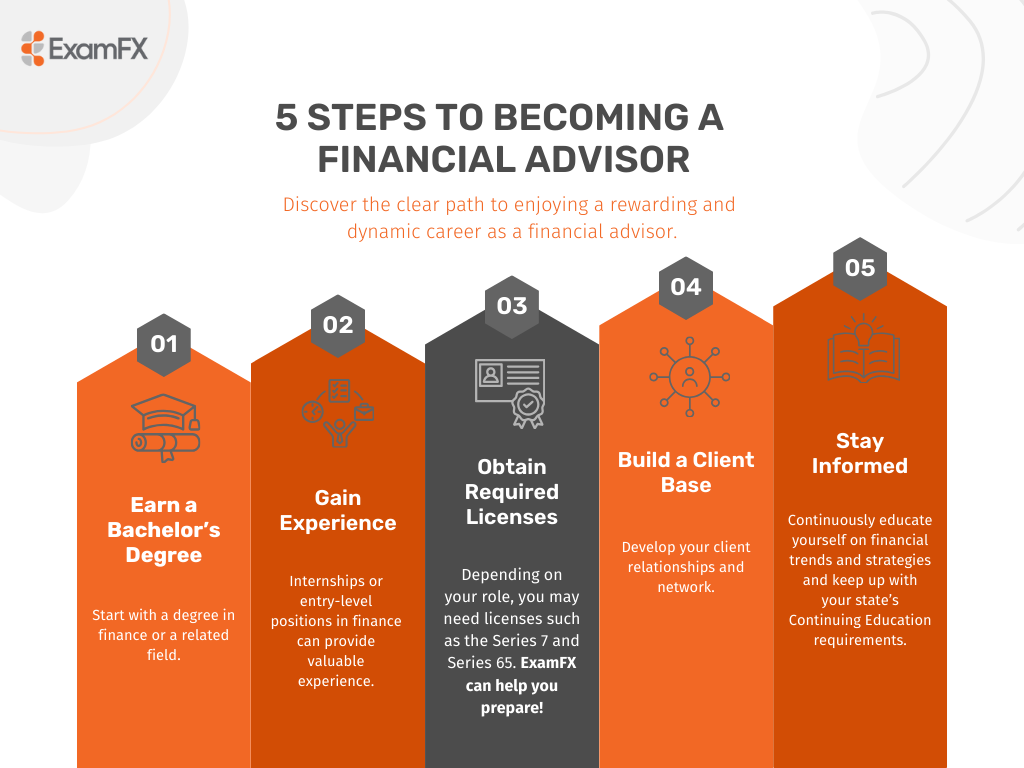
- Earn a Bachelor's Degree: Start with a degree in finance or a related field.
- Gain Experience: Through internships or entry-level finance roles.
- Obtain Required Licenses: Depending on your role, you may need licenses such as the Series 7 and Series 65. Pursue additional certifications to enhance your expertise.
- Build a Client Base: Develop your client relationships and network.
- Stay Informed: Continuously educate yourself on financial trends and strategies and keep up with your state’s Continuing Education requirements.
Tests to Become a Financial Advisor
There are many securities certifications that can help your path to becoming a financial advisor, but some of the common licenses held by U.S. financial advisors include:
ExamFX's online securities training courses for these exams are built to align with the exam guidelines set by FINRA and NASAA, with study materials, flashcards, and practice exams designed to get candidates ready for exam day.
Ready to start? Explore ExamFX's securities licensing courses and take the first step toward your financial advisor career.
ExamFX's Pass Guarantee currently applies to our insurance prelicensing courses; securities candidates get the same practice exams, checkpoint exams, and instructor support that back that guarantee, without the guarantee itself attached to these exams yet.


.png?t=1754063329999&width=40&height=35&name=Img%20(6).png)